

Takeaways
- Treasury chief Ramathan Ggoobi told citizens to stop being big spenders and tighten their belts due to the weakening shilling.
- Government agencies saw their fuel budgets slashed in half, forcing many officials to swap road trips for virtual meetings.
- While keeping funds for agriculture and tourism, the treasury department intentionally held back cash for non-essential items.
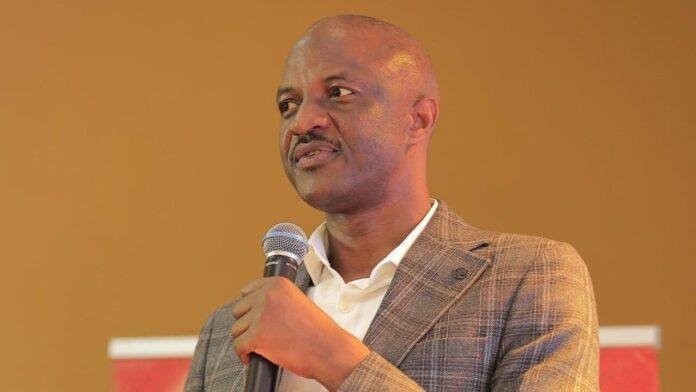
Secretary to the Treasury Ramathan Ggoobi has urged Ugandans to cut unnecessary spending and adopt more disciplined financial habits as the country grapples with rising economic pressures, including the weakening shilling and increasing fuel costs.

While speaking on KFM’s VPN programme, Ggoobi explained that when central banks raise interest rates, the signal goes beyond commercial banks to every economic agent, including households, businesses and government institutions, to reduce unnecessary expenditure.
“On a serious note, the first major signal of a central bank is to tell you, tighten right now. And they are not telling banks alone. They are telling every economic agent,” Ggoobi said.
Using the example of a motorist accustomed to filling their vehicle’s tank and offering random lifts or making unnecessary trips, Ggoobi said the prevailing economic conditions required people to rethink their spending habits.
RELATED ARTICLES
“If you have a car, you are used to buying fuel full tank. You go and you say, full tank, they put in for you to go and drop around every random person. Can I give you a lift, can I do this? And I drop you. This is the time you drop yourself home,” he said.
He added that while people could continue driving, they needed to avoid unnecessary journeys.
“You may drive, but don’t drive aimlessly,” Ggoobi said.
The Treasury chief further explained that the government had already begun implementing similar austerity measures by reducing expenditure on consumptive items across ministries, departments and agencies (MDAs).
He cited fuel allocations as an example, saying government entities that previously had a monthly fuel budget of Shs5 million had received only Shs2.5 million, forcing them to reduce trips and consider alternatives such as virtual meetings.
“If you had a budget of fuel of five million shillings in a month, now we have released 2.5 million. Reduce the trips. If you are going to go to Kabale to attend a workshop, now attend it online. You don’t need to drive there,” he explained.
Ggoobi said the government had deliberately reduced funding for consumptive expenditure in the second quarter while protecting sectors considered essential to sustaining economic growth.
“That’s why we released less money in quarter two on consumptive items. We protected the growth drivers,” he said.
According to Ggoobi, the government maintained funding for agriculture, tourism, industrial development, science, technology and innovation to ensure that economic activities capable of generating growth continued without disruption.
“We released the budget of agriculture, we released the budget of tourism, we released the budget of the ministry responsible for helping industrialists, we released the budget of STI, science, technology and innovation, so that those things continue unaffected because you need them to spend and create more growth. We don’t need to lose growth,” he added.
His remarks come amid growing concerns over Uganda’s economic situation, with the shilling facing pressure against the US dollar and rising fuel costs adding to the cost of doing business and household expenditure. The tightening of monetary policy has also heightened attention on the cost of borrowing and the need to contain inflation.
However, following social media backlash over a circulating clip of his remarks, Ggoobi later took to his X account to challenge the way his comments had been presented.
“There is something communication experts call ‘decontextualisation’ (or is it ‘liar’s editing’?), where one isolates a soundbite or short clip from the broader discussion so that the speaker appears to express the opposite of what they actually intended to say,” he wrote.
The Treasury chief’s response followed criticism from social media users over his comments on cutting expenditure, although his original remarks centred on the need for individuals, businesses and government institutions to exercise spending discipline during a period of economic pressure.