

TAKEAWAYS
- Strategic location: Nakasongola sits in the Central Region and borders districts linked to Uganda’s northern, eastern and western corridors, giving it strong potential as a national administrative hub.
- Room to build from scratch: Compared with heavily developed Kampala, Nakasongola offers considerably more open land for planned roads, government institutions, residential areas and commercial zones.
- Transport potential: Its location near Lake Kyoga, together with existing road networks and Nakasongola Airport, could allow Uganda to develop an integrated road, water and air transport system.
The debate over whether Uganda should eventually relocate its capital city from Kampala is no longer purely an academic conversation.
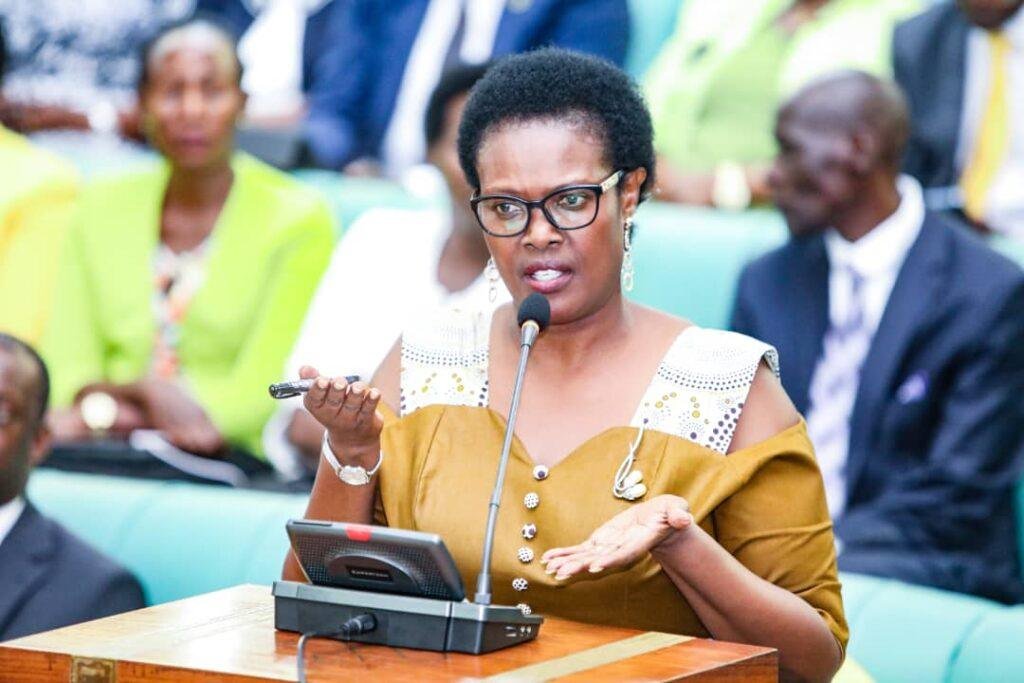
In recent weeks, the proposal has attracted renewed attention following remarks by Minister of State for Urban Development Hon. Margaret Muhanga, who has argued that Uganda should consider moving the capital away from an increasingly congested Kampala. Patro Uganda previously reported on Muhanga’s proposal, which was framed around the need to reduce pressure on Kampala and promote more balanced national development.
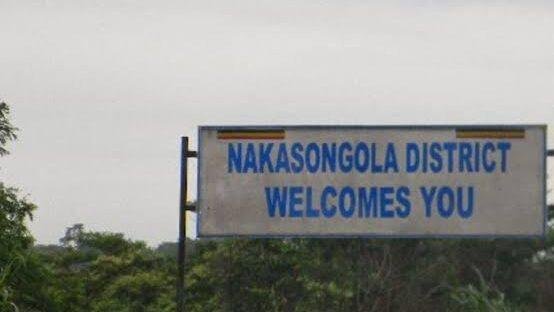
One location that has increasingly featured in discussions about a possible new capital is Nakasongola District.
There is, however, an important distinction to make: Nakasongola has not been officially designated as Uganda’s new capital. The idea remains a proposal and part of a wider discussion about Uganda’s long-term urban planning.
RELATED ARTICLES
But if Uganda were ever to build a new administrative capital, Nakasongola has several characteristics that make the district worth considering.
1. A strategic central location
Perhaps Nakasongola’s biggest advantage is geography.
The district is located in Uganda’s Central Region but sits towards the northern part of the region, giving it connections towards several parts of the country.
Nakasongola borders Luweero and Kayunga, while also sharing boundaries with Nakaseke, Apac, Amolatar and Masindi. Uganda Wildlife Authority documentation puts the district’s land area at approximately 3,505 square kilometres.
That positioning could make it attractive for a national capital intended to serve the entire country rather than being heavily concentrated around the Lake Victoria basin.
In simple terms, a new capital in Nakasongola could potentially be positioned as a meeting point between Uganda’s Central, Northern, Eastern and Western transport corridors.
2. Uganda could plan the city before it grows
This may be Nakasongola’s strongest argument.
Kampala has developed over decades, leaving planners to work around existing buildings, businesses, roads, neighbourhoods and complicated land arrangements.
Expanding major roads or creating entirely new transport corridors in a densely developed city can require significant compensation and relocation.
Nakasongola presents a different situation.
Much of the district remains relatively open, meaning a new urban centre could theoretically be planned before large-scale development takes place.
That would allow government planners to designate areas for Parliament, ministries, diplomatic missions, residential neighbourhoods, commercial districts, industrial parks, universities, hospitals and green spaces from the beginning.
The concept is not entirely new. A proposal published in 2023 envisioned a large master-planned city along the shores of Lake Kyoga, incorporating civic, business, industrial, ICT, diplomatic, residential and tourism zones.
3. Less pressure from existing urban development
Kampala’s biggest challenge is not simply its population.
It is the concentration of economic activity, government institutions, businesses and commuters within a relatively constrained metropolitan area.
Kampala is Uganda’s political, commercial and institutional hub and has experienced enormous daytime population pressure. One urban research profile estimates about 1.7 million residents at night compared with roughly 4.5 million people during the day.
A new administrative capital could therefore take some of the pressure away from Kampala without necessarily destroying Kampala’s role as Uganda’s commercial powerhouse.
Rather than replacing Kampala overnight, Uganda could gradually create a second major urban centre where government functions and new investments could be relocated over many years.
4. Roads could be designed for the future
One of the ideas associated with the Nakasongola proposal is the development of very wide road corridors, including a 10-lane highway concept, with lanes allocated in both directions.
The attraction is obvious.
Instead of trying to retrofit a massive road network into an already congested city, planners could reserve land for major highways, public transport corridors, service roads, pedestrian infrastructure and cycling routes before construction begins.
The objective would not simply be to build more lanes.
A genuinely modern capital would need an integrated transport system combining highways with public buses, potentially rail, walking infrastructure and strategically located transport hubs.
That is where the Nakasongola concept could differ fundamentally from simply expanding Kampala.
5. Lake Kyoga could give the city a water-transport advantage
Nakasongola’s relationship with Lake Kyoga is another potentially important advantage.
The Lake Kyoga basin covers parts of several districts, including Nakasongola, and the lake already supports fishing and water-based activities in the surrounding region.
A purpose-built city along or near the lake could potentially incorporate docks, landing sites and other water-transport infrastructure.
In the long term, that could create another transportation corridor for people and goods while also opening opportunities for tourism, hospitality and recreation.
The idea of waterfront development could also give a future Nakasongola city something Kampala does not have in the same way: the opportunity to deliberately design a major urban waterfront from the beginning.
6. Nakasongola already has significant aviation infrastructure
Another interesting factor is aviation.
Nakasongola already hosts Nakasongola Airport, located at the Nakasongola Air Force Base.
Available records describe it as a military airport with an asphalt runway of approximately 3,000 metres, making it a significant piece of existing aviation infrastructure.
That does not mean it is already a civilian international airport capable of serving a future capital.
However, its existence could provide a starting point for discussions about how aviation infrastructure might be incorporated into a long-term city plan.
Any future civilian airport would, of course, require substantial investment, regulatory approvals, environmental assessment and purpose-built passenger and cargo facilities.
So the claim that Nakasongola would immediately have “the biggest airport in Africa” should not be treated as fact.
The more realistic argument is that the district has space and existing aviation infrastructure around which a much larger aviation hub could potentially be developed.
7. The relocation would not have to happen overnight
Perhaps the biggest misconception about moving a capital is that government would simply announce a new city and move everything there.
That is not how major capital relocations generally work.
Countries that have relocated or developed new administrative capitals have often taken decades to establish the new centres.
Nigeria’s move from Lagos to Abuja and Tanzania’s decision to develop Dodoma as its capital demonstrate how complicated and long-term such transitions can be.
Uganda could theoretically follow a similar model.
Kampala could remain the country’s commercial and economic centre while a new city gradually takes on more administrative functions.
Government ministries could move in phases. New diplomatic facilities could be established there. Parliament and other state institutions could eventually follow. Businesses would then have an incentive to establish offices around the growing administrative centre.
For now it’s waited to see if this plan will evetnually be realized.